
物理學院“博約學術論壇”系列報告第29期 (2012年第18期)
物理學院“博約學術論壇”系列報告第29期 (2012年第18期)
題 目:納米結構之極大頻隙:新的挑戰與一些近展
MAXIMUM BANDGAPS OF NANO-STRUCTURED MATERIALS:
CHALLENGES AND SOME RECENT PROGRESS
報告人:張建成 教授
單 位:臺灣大學?應用力學研究所
時 間:2012年10月24日(星期三)上午10:00
地 點:中心教學樓610
摘 要:
This talk consists of two parts which address the issues of computing maximum bandgaps for dielectric photonic and plasmonic (metal-dielectric) periodic structures (artificial crystals), respectively.
(A) Photonic crystals with large full band gaps are of academic and practical interest. Large full band gaps allow strong photon localization with the gap, and a detailed manipulation of photonic defect states. They have important applications such as defect cavities, optical waveguides, defect-mode photonic crystal lasers, and feedback mirror in laser diodes. Because of the diversity of photonic crystals, there is a great demand for a general method for fast and accurate prediction of their band-gap structures. Two fast and accurate methods of inverse iteration with multigrid acceleration are developed to compute band structures of photonic crystals of general shape. In particular, we report two-dimensional photonic crystals of silicon air with an optimal full band gap of gap-midgap ratio 0.2421, which is 30% larger than ever reported in the literature. The crystals consist of a hexagonal array of circular columns, each connected to its nearest neighbors by slender rectangular rods. A systematic study with respect to the geometric parameters of the photonic crystals was made possible with the present method in drawing a three-dimensional band-gap diagram with reasonable computing time.
(B) In recent years, we have seen a steadily growing interest in considering the effects of including metallic components in photonic crystals. In particular, the interaction of light with metals in a periodic structure excites the modes of surface plasmon polariton and causes possible band gaps in the dispersion relations. It has been difficult to compute the band structures for photonic crystals with metallic components included in the periodic units. The existence of modes of surface plasmon polariton presents the major difficulty not only because of the localized nature of the modes but also of the apparent necessity of handling a nonlinear eigenvalue problem. Here we show that by introducing an interfacial operator within the finite-difference framework, we are able to formulate the problem for computing modes of surface plasmon polariton in the format of standard eigenvalue problems. Results are uncovered by applying the method to periodic structures with corrugated interfaces between metals and dielectric materials, as well as other classes of interfaces.
簡 歷:
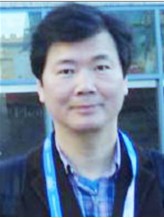
After obtaining his Ph.D. degree, Dr. Chang had worked at the Lawrence Berkeley National Laboratory as a Research Associate. In 1986, he went to Minneapolis, holding a Visiting Assistant Professorship at the Institute for Mathematics and its Applications. Since 1987, he has been a faculty member at the Institute of Applied Mechanics, National Taiwan University, Associate Professor (1987) and Professor (1993), and has been appointed as a Distinguished Professor since 2007. From 1987 to present, he has held visiting positions at several academic institutions: California Institute of Technology (Summer 1987, Research Associate), University Erlangen-Nürnburg, Germany (1994-1995, the Humboldt Foundation), University of California, Berkeley (Fall 1997, NSC Visiting Program), Columbia University (Special Invitation, Fall 1998), and HKUST (Hong Kong, Spring 2003) under a Distinguished Visiting Scholar Program. From July 2005 to June 2009, Prof. Chang had held a joint appointment in Academia Sinica on mission to establish the Division of Mechanics in the Research Center for Applied Sciences. From 08/2009-07/2012, Prof. Chang had served as the Director of the Institute of Applied Mechanics, Taiwan University.
Prof. Chien C. Chang has done research in the fields of fluid mechanics and scientific computation, specializing in vortex dynamics & turbulence and theory of force elements in hydrodynamics/ aerodynamics. Recently, he has also been engaged in research work on micro & nano-fluidics, biological modeling and imaging as well as in mechanics of micro-scale composites and nano-optics/plasmonics for metallic/dielectric materials. Prof. Chang has published more than 100 papers in internationally renowned journals such as Journal of Fluid Mechanics, Physics of Fluids, Proc Royal Society, London Series A, Physical Review A,B,E, Lab on a Chip, Ultrasound in Medicine and Biology and Physics in Medicine and Biology. Over the past 25 years, he has supervised 20 doctoral theses and more than 70 MS theses, all in the Taiwan University.
邀請人:范天佑 教授
聯系方式:物理學院辦公室(68913163)
網 址: http://physics.bit.edu.cn/
(審核:姜艷)